
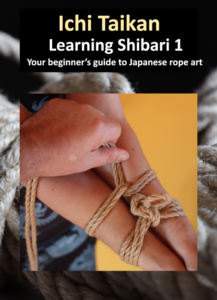
The Book: Foundations and Orientation
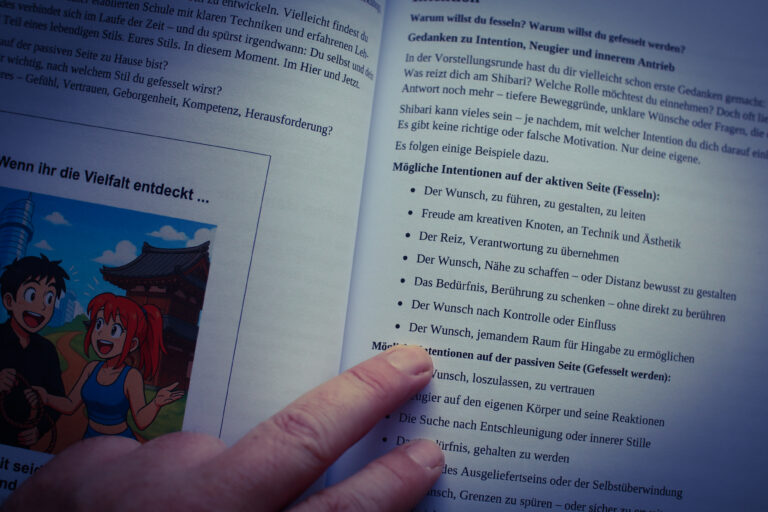
This book is an invitation to explore for yourself, and a companion for your personal path in rope.
It covers topics such as:
The history and cultural context of Shibari
Language, roles, and intention in rope practice
Rope materials and essential foundations
Selected ties and basic forms
Safety, awareness, and aftercare
How this book shares knowledge:
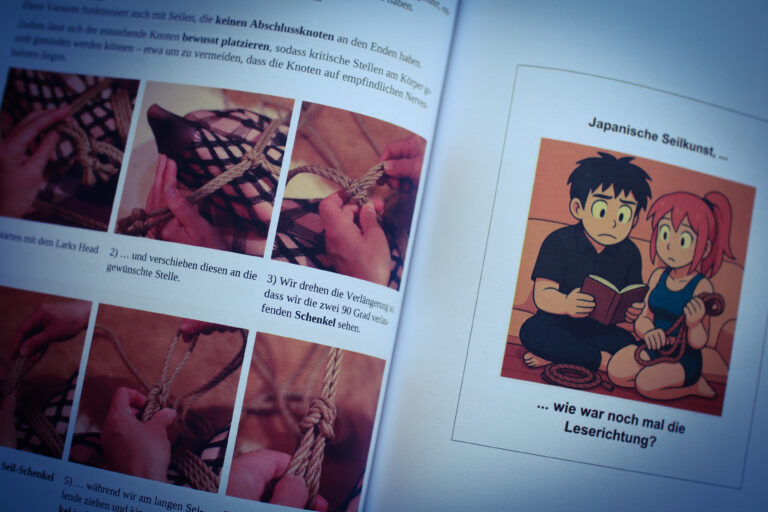
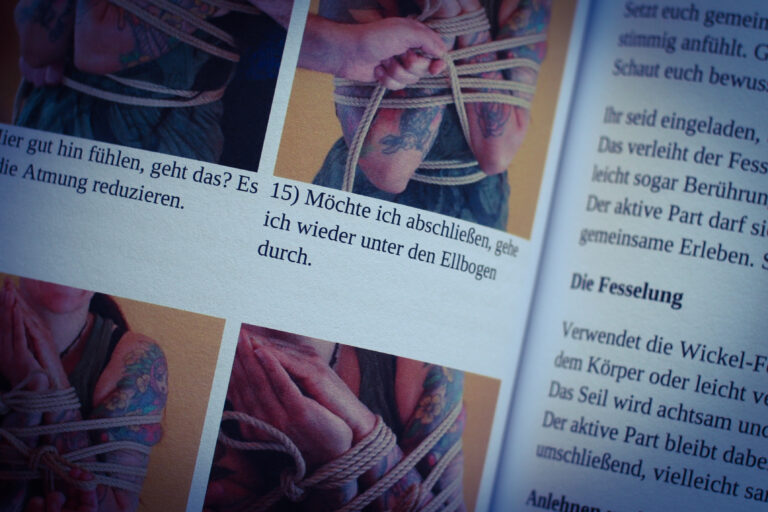
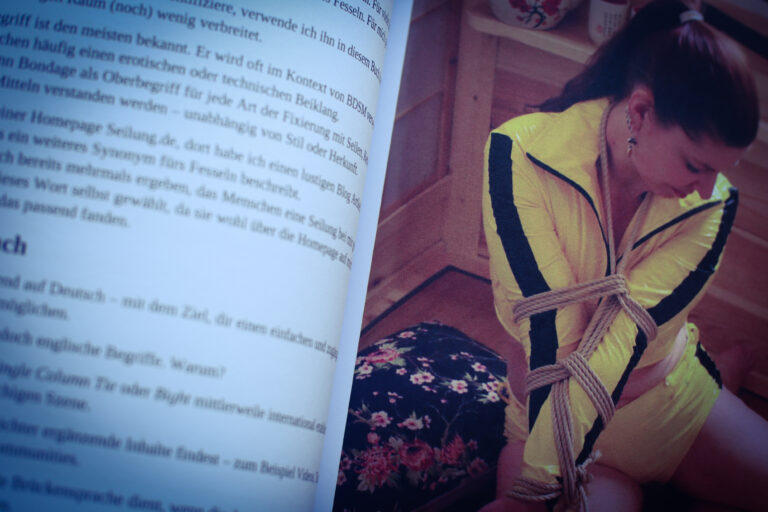
Detailed photo series for each tie
Step by step explanations with a clear structure
Difficulty level and self tie suitability for each form
Notes on risks, boundaries, and individual differences
Additional practical tips and personal experience
Who is this book for?
For you, if you…
are looking for a calm and structured introduction to Shibari
prefer learning through images and step by step guidance
want to practice at your own pace
value awareness, communication, and risk consciousness
see Shibari as a path of learning and encounter
Less suitable, if you…
expect quick results or fixed promises
are mainly looking for explicit erotic content
want complex suspensions or advanced techniques
need a rigid “this is the only way” teaching
Note
This book does not replace workshops, medical advice, or personal guidance.
It is meant as an orientation and learning support for an attentive and responsible approach to rope.
Especially topics like safety, risk awareness, and clean rope handling are often easier to learn in a workshop setting,
where questions can be answered directly and movements can be explored together.
If you prefer learning Shibari in a personal setting, you can find my current dates here:
Reviews: Words from readers
“The step by step photo instructions help me learn at my own pace, without pressure.”
“A very good book for beginners. The many illustrated guides make practice easy, while safety and important aspects are not neglected.”
“It was comforting to read that every body is different, and that learning can happen in your own rhythm, without comparison and without pressure.”
“The photos make it easy to orient yourself and clearly imagine how it should look in the end. Very helpful, with many inspiring ideas.”